# OS Open UPRN Overview

OS Open UPRN is an open dataset that contains the position of each record held within [AddressBase Premium](/os-downloads/products/addresses-and-names-portfolio/addressbase-premium.md) along with the unique identifier – the Unique Property Reference Number (UPRN).

The product allows users to link and associate datasets by using either the UPRN or the position of the address point. It is designed to bridge the gap between disparate data sets and enable the wider adoption of the UPRN to encourage greater data sharing.

This data is usable in a GIS application and can also be integrated into a spatial database.

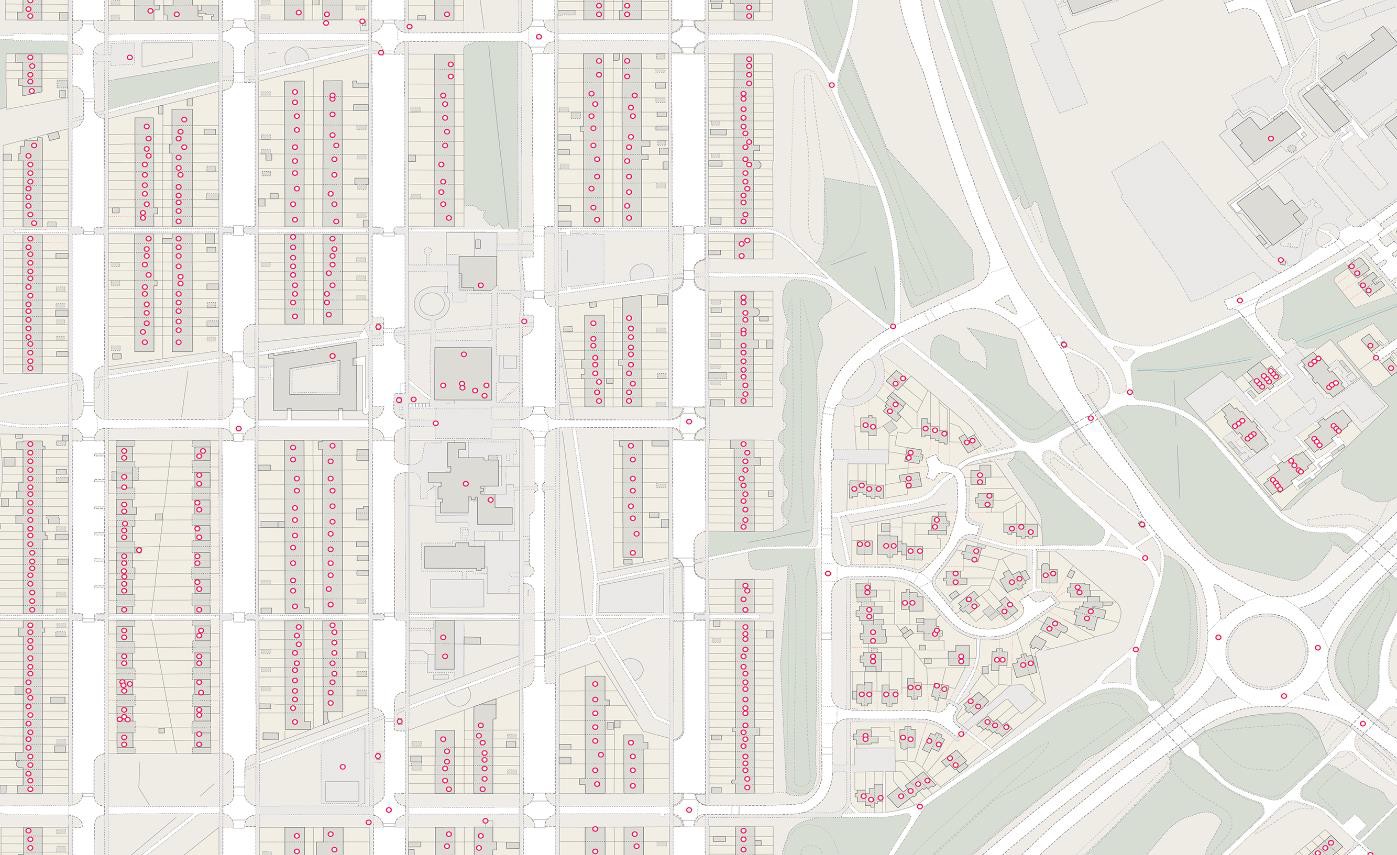
<figure><img src="/files/oanylJK6saLoRAJDdhnn" alt="Visualisation showing a large number of properties identified on a map by their UPRN – a pink dot marking the centre of the property" width="563"><figcaption><p>Visualisation showing a large number of properties identified on a map by their UPRN – a pink dot marking the centre of the property. A background map has been included for context.</p></figcaption></figure>

{% hint style="info" %}
**Unique Property Reference Number**

A UPRN is a unique numeric identifier for every addressable location in Great Britain. The UPRN is the persistent identifier providing consistency across the [AddressBase product range](/os-downloads/products/addresses-and-names-portfolio/addressbase-fundamentals/addressbase-product-family.md).

Each address record has a UPRN, assigned by either Ordnance Survey or Local Authorities in England, Wales and Scotland, depending on the type of address. This is the primary key of the OS Open UPRN product.

Throughout its lifecycle, information on the address of a property can change. This may be due to a change of name, change of use, or the eventual demolition of the property. Independent of any changes being made, the UPRN associated to an address is never changed, meaning the unique identifier remains persistent and reliable.
{% endhint %}

## Key features

The key features of the OS Open UPRN product are:

* It will be synchronised to the release of [AddressBase Premium](/os-downloads/products/addresses-and-names-portfolio/addressbase-premium.md) in completeness and currency.
* It will include UPRNs for all addressable locations. An addressable location may be any kind of building, residential or commercial, or it may be an object that might not have a ‘normal’ address, such as a pond or bus shelter.
* All UPRNs will be included, independent of their lifecycle state. Therefore, under construction, in use and demolished UPRNs will all be included.

Both the CSV and the GeoPackage data formats will have five core attributes: UPRN, X\_COORDINATE, Y\_COORDINATE, LATITUDE and LONGITUDE. More information about the structure of the product can be found in the [OS Open UPRN Technical Specification](/os-downloads/products/addresses-and-names-portfolio/os-open-uprn/os-open-uprn-technical-specification.md).

## Product applications

OS Open UPRN enables users to:

* Share information held against a UPRN with a location.
* Link together information associated with UPRNs.

The above core use cases will enable many more datasets to be published which include the authoritative UPRN as well as the precise geometry included in OS Premium products. This will facilitate the wider adoption of the UPRN and make a critical identifier widely available.&#x20;

## Index

This overview includes the following sections:

* [What is an identifier?](/os-downloads/products/buildings-and-infrastructure-portfolio/os-open-toid/os-open-toid-overview/what-is-an-identifier.md)
* [Product supply](/os-downloads/products/addresses-and-names-portfolio/os-open-uprn/os-open-uprn-overview/product-supply.md)
* [Coordinate reference systems](/os-downloads/products/addresses-and-names-portfolio/os-open-uprn/os-open-uprn-overview/coordinate-reference-systems.md)


---

# Agent Instructions: Querying This Documentation

If you need additional information that is not directly available in this page, you can query the documentation dynamically by asking a question.

Perform an HTTP GET request on the current page URL with the `ask` query parameter:

```
GET https://docs.os.uk/os-downloads/products/addresses-and-names-portfolio/os-open-uprn/os-open-uprn-overview.md?ask=<question>
```

The question should be specific, self-contained, and written in natural language.
The response will contain a direct answer to the question and relevant excerpts and sources from the documentation.

Use this mechanism when the answer is not explicitly present in the current page, you need clarification or additional context, or you want to retrieve related documentation sections.
