Routing and Asset Management Information (RAMI)


Collection applications
Key elements
FAQs
Coverage
Default coordinate reference systems
Temporal filtering
Supply formats
Supply mechanism
Using our data
Useful links
Last updated
Was this helpful?
The OS Routing and Asset Management Information (RAMI) Collection provides in-depth routing and asset management information for roads across Great Britain. The collection integrates information from Ordnance Survey's large-scale data with additional street data held within the National Street Gazetteer (NSG).
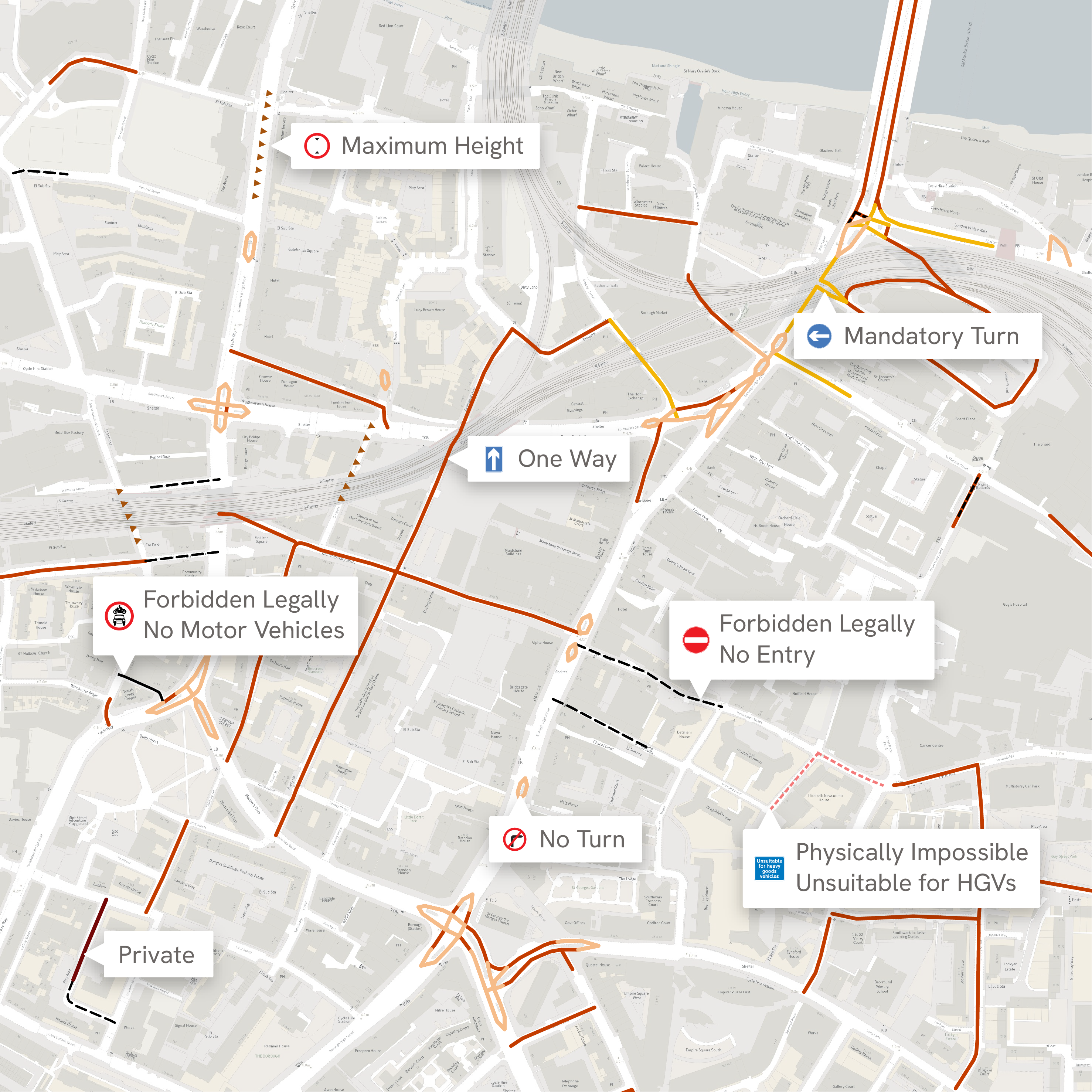
The routing information provides details about potential routing hazards (for example, dangerous bends and low bridges) and vehicle restrictions (for example, road widths within urban extents and one-way streets).
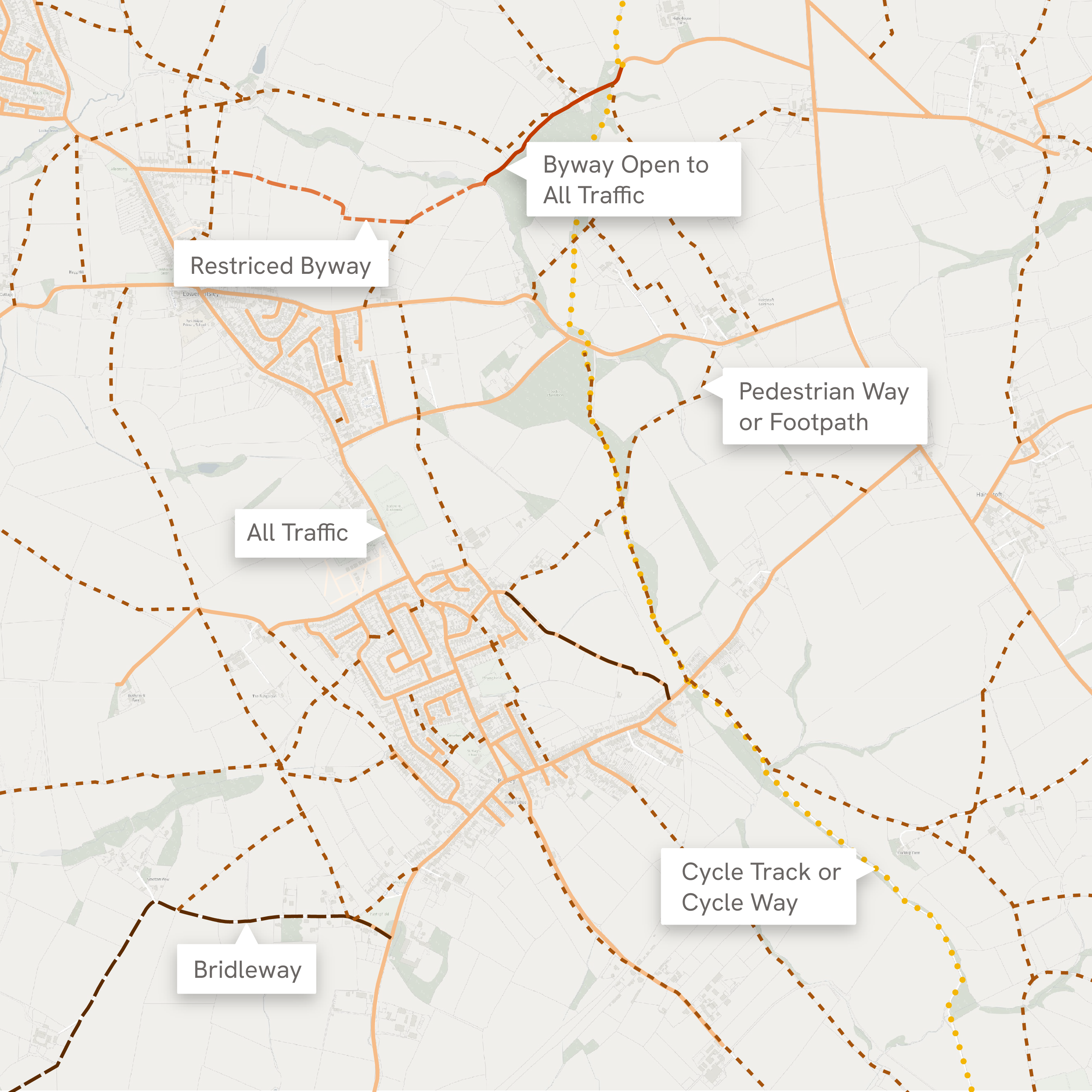
The asset management information details which authority is responsible for maintaining a street, how a street should be restored following works, and if there are any conditions that the local highway or roads authority have associated to a street.


The OS RAMI Collection allows you to:
Ensure your routing and asset management information data is always up to date with monthly updates.
Create a fully routable network across Great Britain.
Identify the authority responsible for the naming, numbering and maintenance of a street.
Easily and quickly identify protected streets.
View routing restriction information, such as low bridges, turn restrictions, time restrictions, and height, weight and width restrictions.
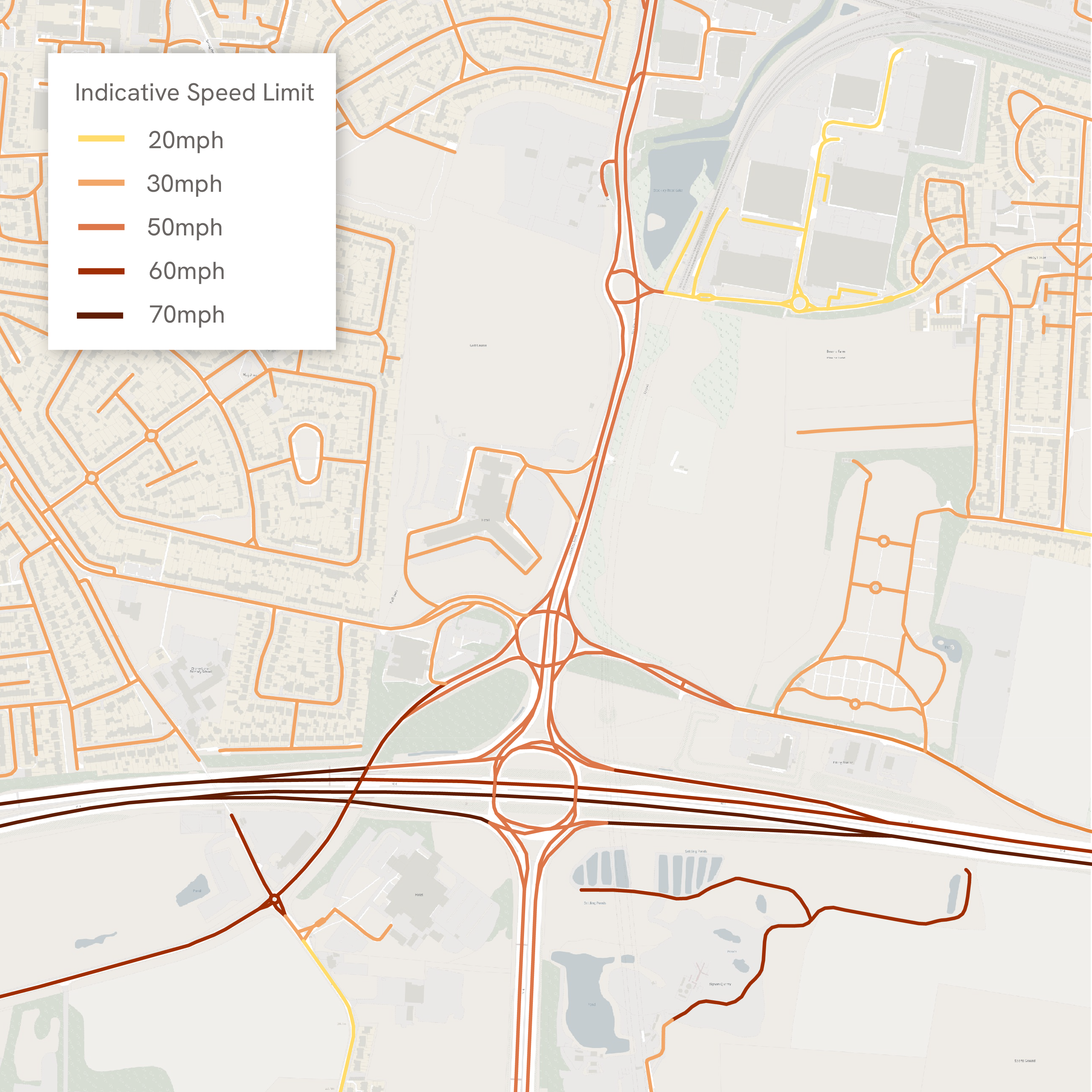
Perform travel time analysis for different time periods of the day with average speed data, and conduct risk analysis with indicative speed limits data.
Monthly updates to data.
Plug and play – the data is simple and quick to implement as you don't need to pre-process it before you use it.
Rich attribution ensures the data is straightforward to navigate and query.
Simplified attribute naming helps make names easier to understand.
Persistent unique identifiers with lifecycle information.
Cross-references make it easy for you to link data in this collection with data from other OS NGD collections.
Geometry available for every feature.
COU or Full Supply options available for speed data.
Eight daily time periods available for weekdays (Monday to Friday) and six daily time periods available for weekends (Saturday and Sunday) for average speed data.
Speed data is included in the Public Sector Geospatial Agreement (PSGA), so it's free for PSGA Members.
Frequently asked questions (FAQs) about this collection and detailed answers are available from the FAQs page.
Great Britain.
British National Grid (EPSG: 27700) for all feature types in the collection, with the exception of the Average And Indicative Speed Feature Type which is British National Grid + ODN Height (EPSG: 7405).
The earliest date on which you can request a one-off snapshot of a date in the past for data in this collection is noted at the top of the individual feature type pages.
GeoPackage, CSV (comma-separated values) or GeoJSON.
Accessed through the OS Data Hub via:
OS Select+Build (the bespoke OS NGD download service)
OS NGD API – Features
It can't be accessed through OS NGD API – Tiles.
Included in the Public Sector Geospatial Agreement (PSGA) – therefore, it's free at point of use for Public Sector organisations.
Available to OS Partners for commercial resell in your solutions.
Available for organisations to try out for free for six months under the Data Exploration Licence; this licence is primarily designed for organisations either considering becoming an OS Partner or who want to trial OS Premium data before working with an existing OS Partner.
An introductory guide to OS RAMI Collection data is available on our More than Maps site; this guide details the layers, formats and attribution available for data in the collection.
Speed data case study: Find out more about how the OS NGD speed datasets make it easier to analyse travel times, enhance routing analytics and provide accurate insight for safety and infrastructure policy decisions.
Last updated
Was this helpful?
Was this helpful?